
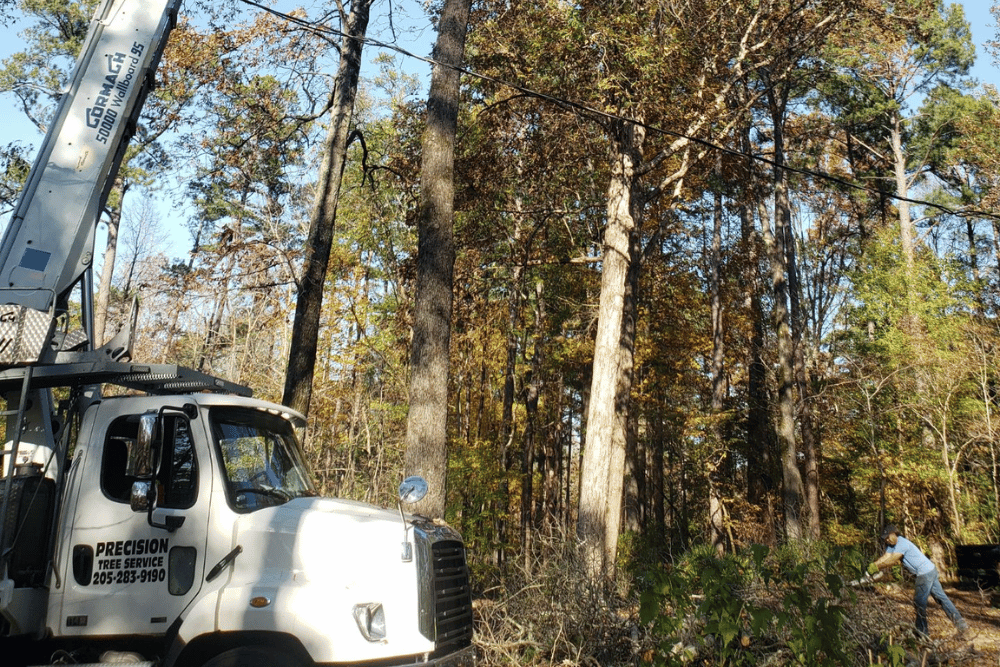
Professional Oak Tree Removal for Birmingham Properties
Oak trees can become enormous over the course of their lives. Their trunks may reach substantial diameters, while large lateral branches can extend far beyond the base of the tree. That growth creates shade and character, but it also means mature oak removal requires careful planning when the tree eventually needs to come down.
A property owner may consider removal because an oak has suffered significant storm damage, developed structural concerns, declined over time, or grown too close to a home or another important part of the property. In other situations, the tree may be healthy but located directly where construction, access, landscaping, or another improvement is planned.
Complete removal is not always the first or only option. If the oak can remain and the primary concern involves overgrown limbs, clearance, dead branches, or canopy management, our professional pruning and trimming may be more appropriate than taking down the entire tree.
Common Reasons an Oak Tree May Need to Be Removed
Because mature oaks are such prominent landscape features, removing one is usually a decision made for a specific reason. The condition of the tree, its relationship to nearby structures, and plans for the property all matter.
- Storm damage: Heavy limbs can break during severe weather, and major damage to the crown or trunk may change the condition of the tree significantly.
- Structural concerns: Large cracks, damaged unions, cavities, substantial decay, or unusual movement may warrant closer evaluation.
- Dead or declining growth: Extensive dieback or deterioration can indicate that an oak is no longer in the condition it once was.
- Proximity to structures: A mature oak growing close to a home, garage, driveway, fence, or other important feature may create concerns as it continues to grow or decline.
- Construction and development: Trees may need to be removed when they stand inside a future building footprint, access route, driveway, fence line, or other planned work area.
- Property redesign: An oak may occupy space needed for landscaping changes, lawn expansion, improved access, or another intended use.
If an oak has already lost major limbs or come down during severe weather, Precision Tree Service can also help with removing storm-damaged trees and debris from the property.
Request an Oak Tree Evaluation
Removing Large Oaks Near Homes & Structures
A mature oak can carry tremendous weight throughout its trunk and spreading canopy. When that tree grows close to a house or another structure, removal has to account for much more than simply getting the tree onto the ground.
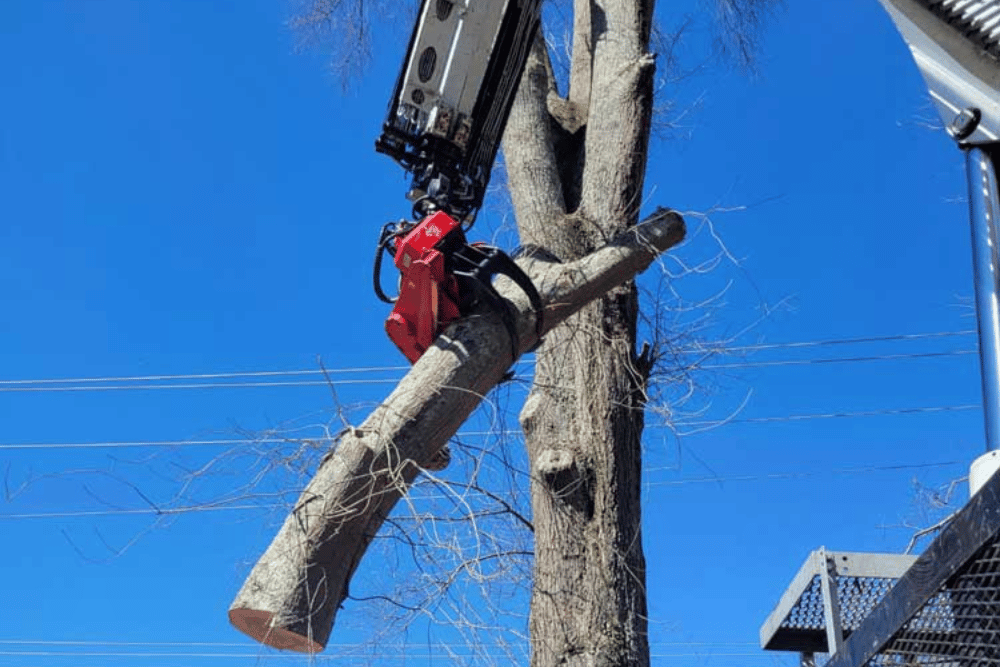
Precision Tree Service evaluates the size of the oak, surrounding structures, available access, and working space before determining an appropriate removal plan for the property.
Our Oak Tree Removal Process
Removing a mature oak requires planning from the ground up. The shape of the canopy, weight of the limbs, condition of the trunk, access around the tree, and proximity of structures can all influence how the job should proceed.
1. Evaluate the Oak and Surrounding Property
We begin by looking at the tree itself and the environment around it. The height, trunk diameter, canopy spread, visible condition, lean, branch structure, and available working area all help determine the complexity of the removal.
2. Identify Nearby Obstacles and Work Space
Homes, garages, driveways, fences, landscaping, other trees, property lines, and access points all have to be considered. A large oak in an open yard may allow for a very different approach than one surrounded by structures or confined to a tight backyard.
3. Plan the Removal Sequence
Large oaks may need to be taken down in sections. The order in which limbs and trunk material are removed is planned around the structure of the tree and the areas available for handling that material.
4. Remove the Tree Material
Once the removal plan is established, the canopy and trunk can be dismantled according to the conditions of the site. Mature limbs and trunk sections can be substantial, so each part of the tree needs to be considered within the larger removal process.
5. Address the Remaining Stump
After the oak is down, a large stump may remain exactly where you want to mow, landscape, build, or otherwise use the property. Our stump grinding and removal options can help reclaim that area after the tree itself has been removed.
Oak Tree Removal After Storm Damage
Large oak canopies can take a significant amount of force during severe weather. Heavy branches may split, trunks can be damaged, and trees that appeared stable before a storm may look noticeably different afterward.
Storm damage does not always mean the entire tree has to be removed. The extent and location of the damage matter. A smaller broken limb may be a pruning issue, while major structural damage involving the trunk or large portions of the canopy may require a different response.
Property owners should also be cautious around partially broken limbs or damaged sections still suspended in the canopy. A tree that has already lost material may continue to change after the storm, particularly if major limbs or trunk sections have been compromised.
When fallen trees, broken limbs, and other storm debris affect multiple areas of the property, coordinating the cleanup with any necessary removal work can help restore access and make the site easier to evaluate.
Removing Oak Trees for Construction & Property Improvements
Not every oak removal is driven by damage or decline. Sometimes a mature tree simply occupies the exact space needed for the next stage of a property.
An oak may stand inside a planned building footprint, too close to a proposed addition, along a new driveway route, inside a future fence line, or in an area being redesigned for landscaping. In those situations, the condition of the tree may be less important than its location.
If several trees need to be removed from a larger portion of the property, individual removal may only be one part of the project. Our tree clearing for construction and property improvements can help coordinate removal across a broader work area.
Planning tree and stump removal before other contractors arrive can also help prevent old trunks, roots, or remaining trees from becoming obstacles once grading, building, landscaping, or fencing begins.
Plan Removal Before Your Project
Oak Tree Removal vs. Pine Tree Removal
Both oaks and pines can grow into very large trees, but their shapes and weight distribution can create different removal considerations. Pines often grow tall with much of their canopy concentrated higher on the trunk. Mature oaks can develop much broader crowns with substantial lateral limbs extending in several directions.
For an oak, those spreading limbs can occupy a large area above a yard, home, driveway, or neighboring property. Individual branches may also carry considerable weight. The tree’s canopy structure therefore becomes an important part of planning how it will be dismantled.
Pines present their own challenges based on height, lean, trunk condition, and surrounding space. For properties with both hardwoods and evergreens, Precision Tree Service also provides removal of tall pine trees when they become damaged, unwanted, or interfere with property plans.
What Happens After an Oak Tree Is Removed?
Removing a large oak can noticeably change a property. A mature canopy may have shaded a substantial portion of the yard, while the trunk and surface roots may have occupied a large amount of usable space.
Once the tree is gone, property owners may choose to establish lawn, redesign planting beds, improve access, install fencing, or move forward with a construction project. What happens next often determines whether the stump should also be addressed.
A large oak stump can remain a significant obstacle even after the trunk and branches are gone. If the area will be mowed, landscaped, graded, or developed, dealing with that stump can help finish the tree removal process rather than leaving the property halfway between its old and new use.
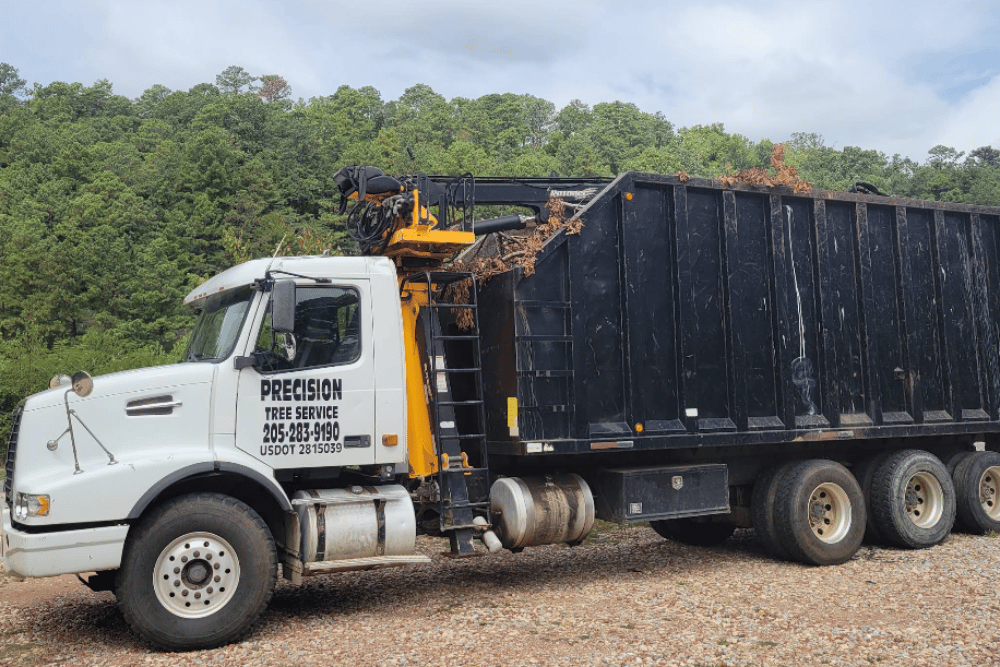
Oak Tree Removal Throughout the Birmingham Area
Mature oak trees are common throughout established neighborhoods, commercial properties, and larger wooded parcels around Birmingham. Their size and location can vary dramatically, so each removal needs to be considered around the individual tree and the property where it is growing.
Precision Tree Service provides oak tree removal throughout Birmingham and surrounding communities for trees affected by storm damage, structural concerns, property improvements, construction plans, and other circumstances.
Our service area also includes Hoover, Bessemer, and Trussville.
FAQs
How do I know if an oak tree needs to be removed?
Can you remove a large oak tree close to my house?
Do you use cranes for oak tree removal?
Can a storm-damaged oak be saved instead of removed?
Can you remove several oak trees during one project?
What happens to the stump after an oak is removed?
Can you remove an oak tree for construction?
Should an oak be removed if only a few branches are causing problems?
How long does it take to remove a large oak tree?
Need a Large Oak Tree Removed?
Whether an oak has been damaged, is creating concern near a home, or stands directly where you need usable space, Precision Tree Service can evaluate the tree and determine an appropriate removal plan for your property.
Contact Precision Tree Service today to discuss oak tree removal in Birmingham, AL and take the next step toward opening up your property.
Request Oak Tree Removal Call (205) 283-9190